Grady County Parole vs Probation
Parole and probation can both place a person under community supervision, but they begin in different ways. Parole follows a state prison sentence and depends on a decision by the State Board of Pardons and Paroles. Probation is imposed by a court, either instead of confinement or as part of a sentence that also includes custody. In Grady County, DCS supervises felony probation and parole through its Cairo office. A jail booking record may mention a probation hold or release, but it is not the final source for current supervision status.
| Point | Parole | Probation |
|---|---|---|
| How it begins | Board-approved release from a state prison sentence | Court-ordered sentence or sentence term |
| Decision maker | State Board of Pardons and Paroles | Sentencing court |
| Local supervision | DCS Cairo Field Office | DCS Cairo for felony cases |
| Best public record | Parolee Database and Board records | Court probation order and DCS confirmation |
| End record | Parole discharge or sentence completion | Court or supervision discharge |
Key terms
TPM means Tentative Parole Month. It is a final-review point, not a promised release date. MRD means Maximum Release Date. Discharge means supervision has formally ended, not merely that the person left a facility.
Verify Grady County Post-Release Supervision
Start with the type of sentence rather than the place of arrest. The Board databases cover state parole decisions and parole status. A probation order comes from the Grady County court record, while DCS is the practical local confirmation channel for felony supervision. Use a name plus a state identifier when possible, because similar names can produce the wrong record.
- Check the custody path. Decide whether the person left Grady County jail, a GDC facility, or another system.
- Search parole status. Open the official Parolee Database for a person believed to have been released on parole.
- Check pre-release timing separately. Use the Inmate TPM Lookup for a state prisoner still under consideration. Do not read a TPM as a completed release.
- Review the court record for probation. A Grady County probation order, revocation order, or sentence record explains the court's action.
- Confirm the serving office. Use the official DCS office page and contact Cairo if the public record does not resolve current local supervision.
- Ask for the discharge record. When supervision may have ended, confirm the formal end date with the Board, DCS, or the court that created the order.
Note: Leaving the active jail population proves neither parole nor probation; the supervision record must identify the legal status.
Grady County DCS Cairo Office
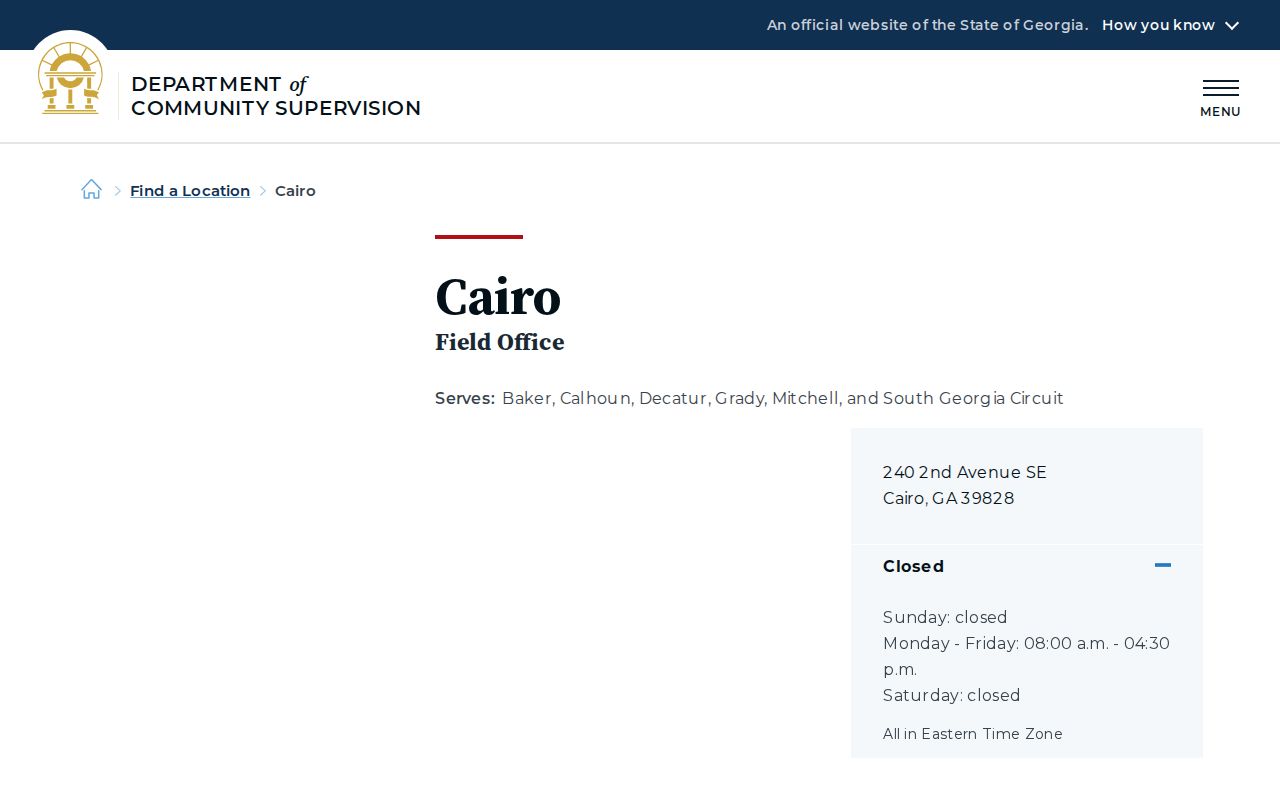
The Georgia Department of Community Supervision Cairo Field Office serves Grady County along with Baker, Calhoun, Decatur, and Mitchell counties and the South Georgia Circuit. It is the local office for many people on felony probation or parole. It does not create the county jail release record and does not replace the Parole Board's decision record.
Georgia DCS Cairo Field Office
Address: 240 2nd Avenue SE, Cairo, GA 39828
Hours: Monday through Friday, 8:00 a.m. to 4:30 p.m.
Phone: 229-377-5347
Fax: 229-377-4396
Coordinating Chief: Tanya Posey
The official DCS page confirms the service area and office details. The captured office view below helps identify the right state channel before a visit.
Grady County Violations and Warrants
Conditions vary by the sentence and written supervision plan. They may require reporting, following travel limits, completing programs, obeying court orders, or complying with other case-specific terms. A violation allegation does not itself show the final outcome. DCS may investigate, the Board may act in a parole matter, and a court may address a probation violation. The resulting record can include continued supervision, changed terms, a warrant, revocation, or return to custody.
An absconder is generally a supervised person whose whereabouts are unknown after a failure to report or maintain contact. A database label should be verified before drawing a conclusion because records can lag after arrest or resolution. For an urgent safety issue, use law enforcement, not a database. For record status, compare the parole record, DCS information, and the court docket. Georgia VINE can give custody-change alerts for participating agencies, but it is not a supervision warrant index.
How Grady County Supervision Ends
Release from a jail or prison and discharge from supervision are separate events. Parole can end through a formal Board or sentence-completion record. Probation can end when the ordered term is completed, a court grants early termination, or another lawful order changes the sentence. A person may therefore be out of custody while still reporting to DCS, or may have completed supervision long after the original Grady County booking disappeared from public view.
Ask for the document that states the end of supervision and its effective date. For parole, begin with the Board and DCS. For probation, review the sentencing court's docket and orders, then confirm with DCS when appropriate. The Grady County released-inmate search and records guide explains how the jail release record differs from a court disposition and a state discharge.
Grady County Parole Decision Records
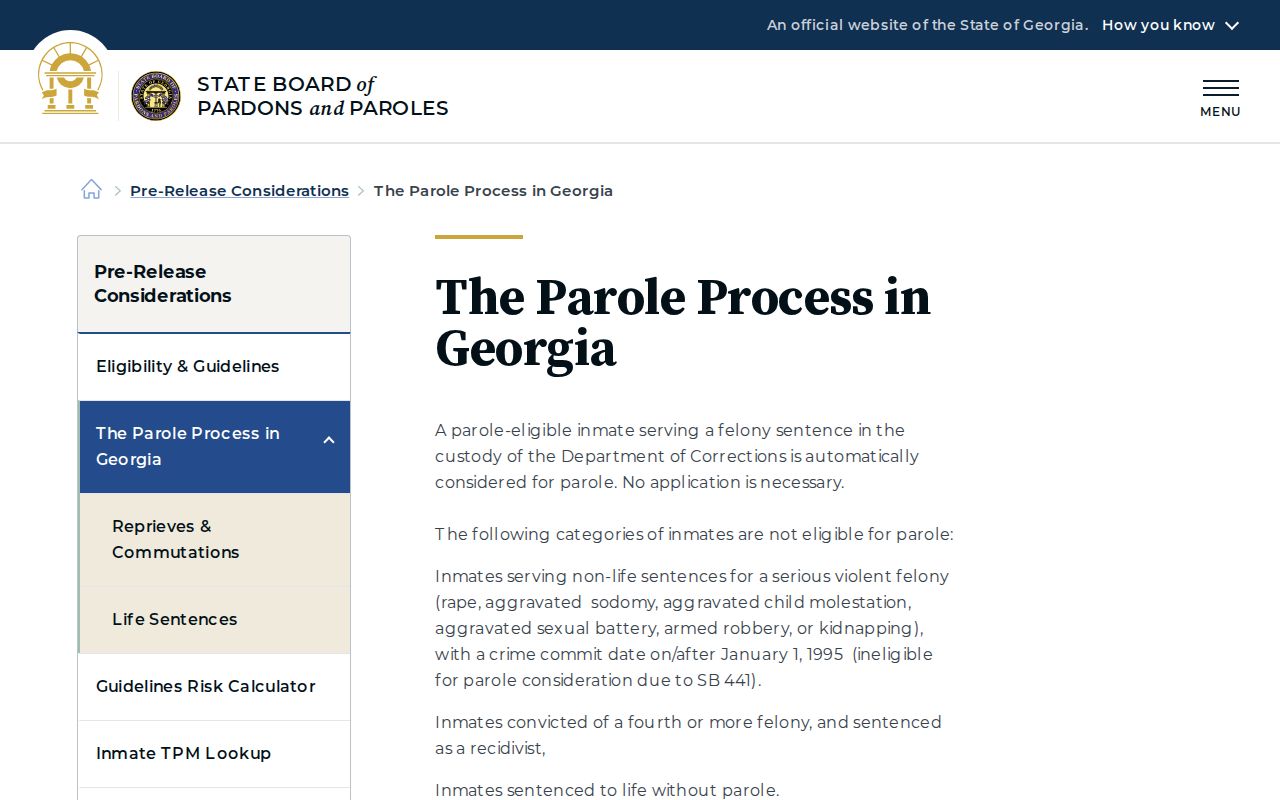
Georgia parole consideration has a pre-release stage and a post-release stage. For most parole-eligible inmates, the Board's process page says eligibility begins after one-third of the prison sentence. The Board may deny parole or set a TPM. At the TPM, it completes a final review and may set a parole release date. Conduct and program completion can affect that review. Certain serious violent felony sentences, fourth felony recidivist cases, and life-without-parole sentences have different limits or no parole eligibility.
Life-sentence review follows different rules. The Board says guidelines are not used for eligible life-sentenced inmates. If parole is denied, reconsideration occurs at least once every eight years under Board policy. Eligibility for a serious violent felony life sentence also varies by offense date. The Board process material identifies seven years for qualifying pre-1995 cases, fourteen years for the 1995 period, and thirty years for the serious violent felony life-sentence category on or after July 1, 2006. O.C.G.A. 17-10-6.1 supplies restrictions for serious violent felonies. These rules concern state sentences, not bond release from the Grady County Detention Facility.
The Board's public meeting notices do not form an individual offender hearing calendar. Its press-release page publishes meeting notices, agendas, and cancellations, but individual cases are not discussed or decided in those public business meetings. For one person, use TPM Lookup before release and the Parolee Database after release. A TPM result marks future review; a parolee result addresses post-release parole. Neither record establishes probation, which remains tied to the sentencing court and DCS.
Victim and official notice requirements form another part of the parole process. The Board materials reference O.C.G.A. 17-17-13, 42-9-43(c)(1), and 42-9-47 for different notice points involving registered victims, prosecutors, judges, and notice before release. Georgia VINE is a separate custody-notification service. A VINE alert can report a participating agency's status change, while the Board record explains the parole decision and DCS handles community supervision. The Board process screenshot below shows the official decision path and helps keep a tentative month separate from a final release.
Note: A Board business-meeting agenda is not a calendar of private case decisions or proof that a named person received parole.
Grady County State Release Cards
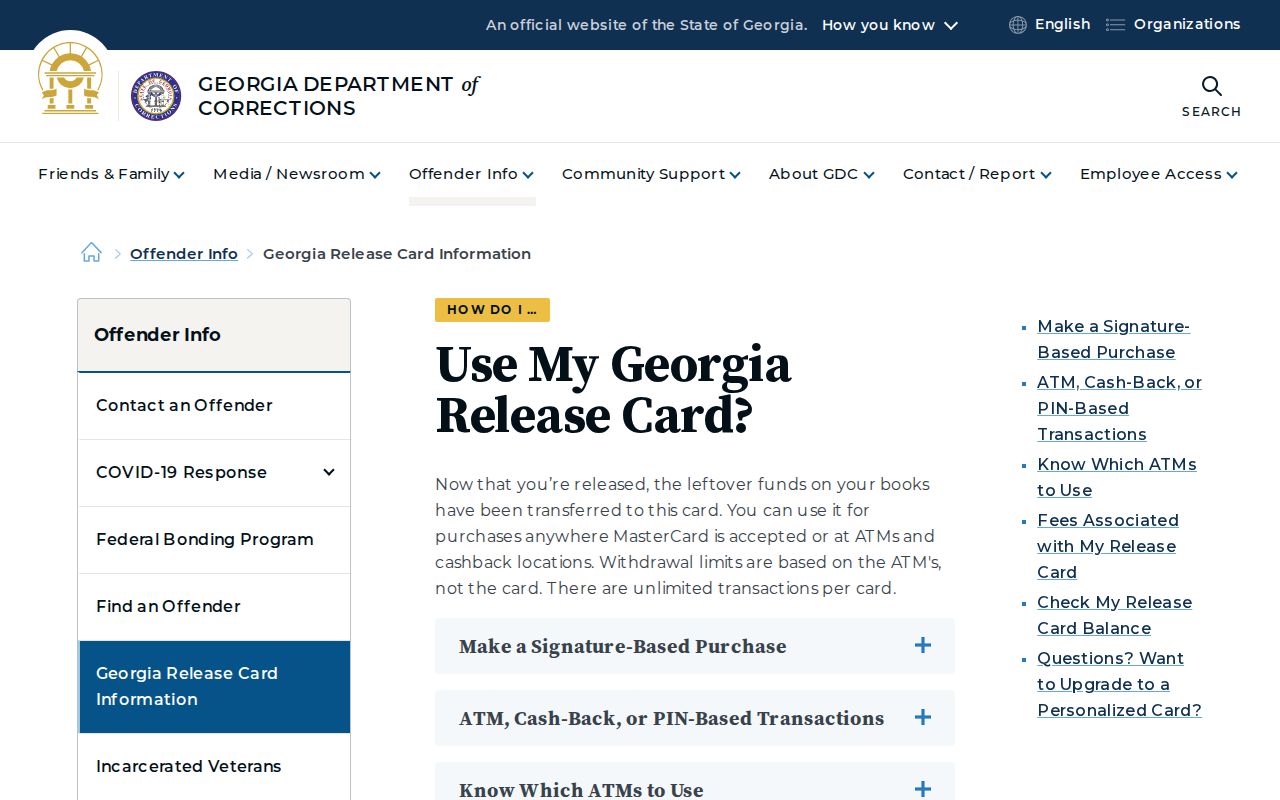
A person leaving GDC custody may receive remaining account funds through a Georgia Release Card. GDC says funds left on the person's books are transferred to the card, which can be used for purchases right away. PIN activation is needed for ATM withdrawals or cash-back transactions. This process is a state-prison release detail, not a Grady County jail property rule.
The distinction helps identify the release system. A person who bonded out of the Grady County Detention Facility should ask the jail about local property and funds. A person discharged from GDC should use the state's card instructions. The GDC release-card page is shown below because it documents this state-specific step.